
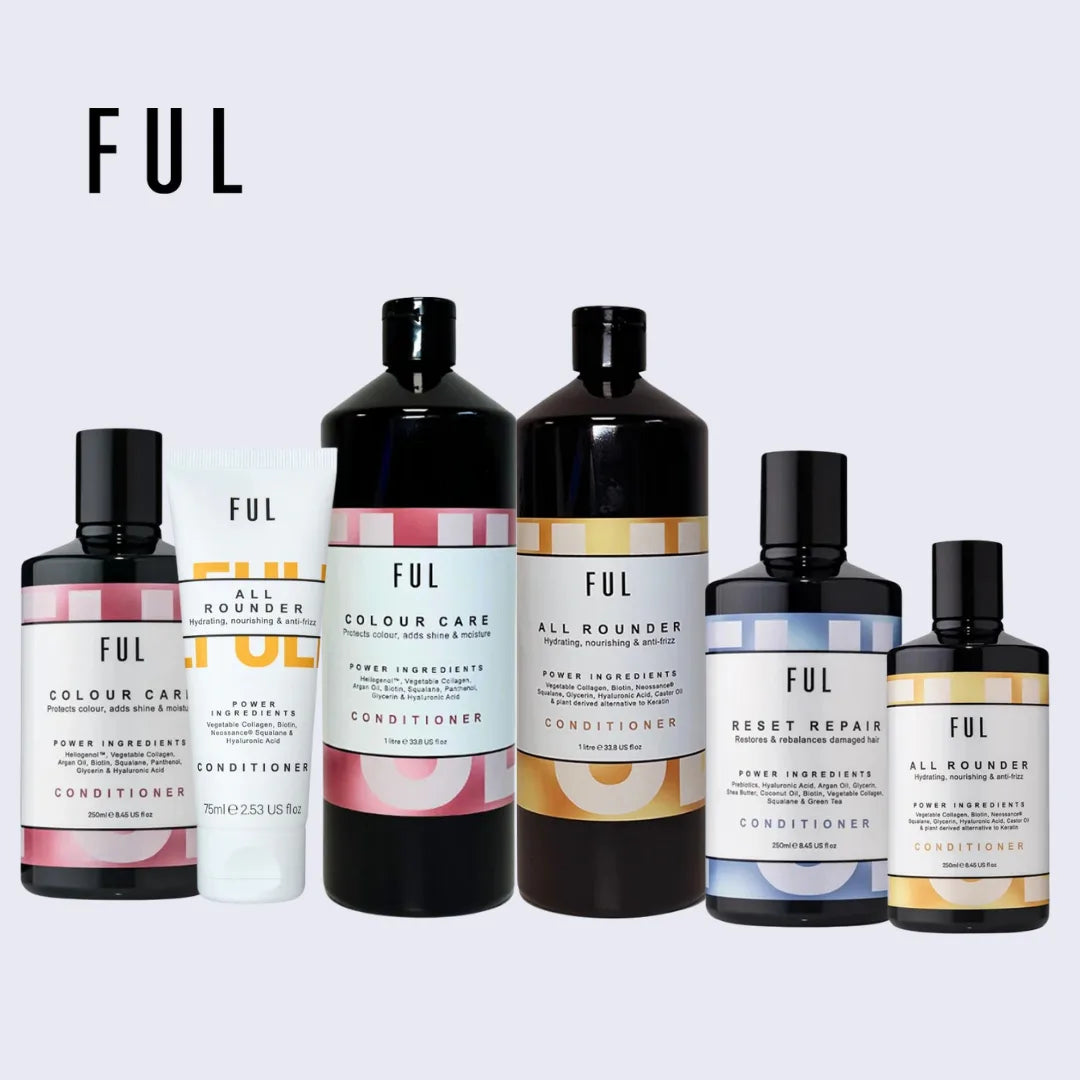
Conditioners work by sealing and flattening the rough, damaged cuticles of your hair, making it softer, shinier, and more manageable. While shampoo acts as a coarse cleanser that roughens the hair's microscopic structure to remove dirt and oils, using a conditioner afterward helps restore the rough hair to a smoother, healthier state. By replenishing moisture, strengthening strands, and reducing frizz and split ends, conditioners maintain your hair's appearance and health.
In this guide, we will explore 10 different types of conditioners, each designed to address specific hair needs and issues. From hydrating formulas that replenish scalp moisture to protein-based conditioners that repair cuticle damage, we will break down how they work and help you find the best conditioner for your hair type and condition.
1. Hydrating Conditioners
Perfect for naturally dry or heat styled hair, hydrating conditioners replenish and lock in moisture to restore the natural hydration levels of hair. Its ingredients include glycerin to draw moisture from the air, aloe vera to soothe and lock in hydration, and coconut oil to deeply penetrate the hair shaft. These conditioners are particularly beneficial for those with dry or coarse hair that tends to lose moisture throughout the day. The added hydration helps prevent hair from feeling brittle, dry, or frizzy, leaving it feeling soft and manageable while also preventing split ends from developing.
2. Moisturising Conditioners
Moisturising conditioners hydrate and soften rough, dry hair by using humectants like glycerin and panthenol to attract and lock in moisture from air, while emollients like coconut oil, argan oil, and shea butter help to soften and smooth the strands. They also contain fatty alcohols that help retain moisture throughout the day and give the conditioner a rich, creamy texture. If your hair is prone to dryness, moisturising conditioners can help reduce frizz, prevent split ends, and make your hair feel soft and shiny without weighing it down.
3. Protein Conditioners
Individuals with thin, weak, or damaged hair can benefit from the keratin, biotin, and silk amino acids present in protein conditioners, which work to repair and strengthen hair strands. These ingredients work together to help reduce the likelihood of further damage by improving hair elasticity and preventing further breakage. If your hair is frequently exposed to chemical treatments, heat styling, pollution, harsh sunlight, or extreme weather conditions, a protein conditioner can restore the strength and resilience of each strand.
4. Leave-In Conditioners
Ideal for those with curly, coily, or frizz-prone hair, leave-in conditioners help detangle and smooth the hair by providing continuous hydration and protection throughout the day without the need to rinse. By staying in the hair throughout the day, they offer long-lasting moisture and frizz control while also protecting against dirt, pollution and UV rays. This is made possible by ingredients like cetearyl alcohol which prevents tangling by making hair smoother. Leave-in conditioners are perfect for individuals looking for added hydration, styling choices, and heat protection. Be careful not to rinse your hair after applying it to wet hair.
5. Deep Conditioners
Unlike regular conditioners, deep conditioners penetrate deeper into the hair shaft to deliver a concentrated dose of nourishing ingredients, making them ideal for over-processed, severely dry, or damaged hair that need extra attention. These conditioners are enriched with shea butter, keratin, and argan or avocado oils, which help restore moisture, strengthen hair, and repair damage caused by chemical or heat treatments. For example, if your hair is coarse and dry because of constant bleaching, then regular use of a deep conditioner can make your hair smoother, shinier, stronger, and more elastic.
6. Colour Care Conditioners
These conditioners maintain the vibrancy of colour-treated hair by preventing colour from fading due to frequent washing, UV exposure, or environmental damage. Enriched with antioxidants, UV filters, and natural oils, colour care conditioners provide the moisture and nourishment that colour-treated hair needs to stay healthy and glossy. They work by sealing the hair cuticle, which preserves the colour and keeps it looking fresh for longer. If you have dyed, highlighted, or bleached hair, a colour care conditioner is essential to keep your hair vibrant, soft, shiny, and well-nourished.
7. Reset/Repair Conditioners
Repair conditioners are designed to restore the natural strength and structure of hair damaged by frequent heat styling, chemical treatments, or environmental factors. These conditioners use keratin, biotin, and natural oils to repair hair cuticles, restore moisture balance, rebuild damaged strands, reduce breakage, and improve elasticity. Reset repair conditioners contain keratin, a key component of natural hair, which allows them to repair hair using ingredients that are native to the hair itself. This makes reset conditioners the best choice for repairing over-processed or heat-damaged hair from within so the hair looks revitalised, soft, and becomes more resilient to future damage.
8. Clarifying Conditioners
After using a clarifying shampoo, a clarifying conditioner helps restore essential moisture without adding back heavy residues. With the help of ingredients like citric acid, vinegar, and plant extracts from tea, lemon, or rosemary, these conditioners cleanse the scalp and hair. At the same time, glycerin, shea butter, natural oils, and proteins work to moisturise and soften the hair. It is especially beneficial for individuals who use styling products frequently or live in areas with hard water. For best results, use a clarifying conditioner once or twice a month, or weekly if product buildup occurs more quickly.
9. Volumising Conditioners
People with fine or limp hair can add volume and fullness without weighing the hair down by using a volumising conditioner. This conditioner provides lightweight moisture and nourishment that lift the hair at the roots, creating the appearance of thicker, fuller hair. Enriched with ingredients like panthenol, proteins, and natural oils, it helps strengthen the hair while maintaining a lightweight texture. For optimal results, volumising conditioners should be used regularly to create natural volume without the heaviness of traditional conditioners.
10. Co-Wash/Cleansing Conditioners
As a gentle alternative to traditional shampoos that contain harsh components, co-wash conditioners use mild surfactants like Decyl Glucoside to gently cleanse the hair without stripping its natural oils. This makes co-washes an ideal choice for individuals with curly, coily, or textured hair, as these hair types are more sensitive to the harshness of regular shampoos. Regular use of a co-wash helps to keep the hair hydrated, refreshed, and nourished while preserving its natural moisture balance.
What Are the Benefits of Using Different Types of Hair Conditioners?
Using the right conditioner can make a significant difference in your hair’s health and appearance. Each type of conditioner is formulated to target specific hair concerns, providing a wide range of benefits from hydration to strengthening and colour protection.
-
Restoring Moisture and Shine: Hydrating and moisturising conditioners help to replenish moisture in dry or damaged hair, making it soft, smooth, and shiny. These are achieved through ingredients like glycerin and coconut oil that help lock in moisture.
-
Strengthening Hair: Protein-based conditioners are designed to rebuild and strengthen hair structure. Such conditioners reinforce hair strands with proteins like keratin, biotin, and amino acids to improve elasticity and reduce breakage.
-
Maintaining Balanced Hydration: Conditioners help hair retain the right level of moisture to prevent dryness and frizz. Conditioners that focus on hydration are ideal for keeping dry hair nourished and flexible without making it greasy.
-
Frizz Control: Hydrating, moisturising, and leave-in conditioners prevent frizz, even in humid conditions, by providing smoothing and hydration.
-
Intensive Repair and Restoration: Deep conditioners and repair conditioners help restore damaged hair. Ideal for over-processed hair, their ingredients deeply penetrate the hair shaft to restore moisture balance and improve the hair’s texture and strength.
-
Colour Protection: Colour care conditioners preserve the vibrancy of dyed hair. They prevent fading by sealing the cuticle and providing moisture, keeping colour-treated hair vibrant and shiny for longer.
-
Scalp Health: Conditioners formulated for scalp health contain ingredients like tea tree oil, salicylic acid, and zinc to help balance oil production, reduce dandruff, and soothe irritation of the scalp.
What Are the Common Side Effects of Overusing Conditioners?
Side effects of overusing conditioners include product buildup, breakage, itchiness, and dullness. Applying conditioners too frequently leaves residue that makes hair feel greasy and heavy, but it can be avoided by rinsing hair thoroughly and using a clarifying shampoo once a month. Over-conditioning can also lead to breakage by making hair overly soft and weak. To prevent this, use protein-based conditioners and apply them to the ends rather than the roots.
Excessive use of conditioner can also cause itchiness and scalp irritation if you do not rinse properly or if you have sensitive skin. Switching to a lighter conditioner or hypoallergenic options can help minimise these issues. Furthermore, overuse may result in dullness and weak texture, as conditioners can weigh down hair, reducing volume and shine. To prevent this, use lightweight conditioners and apply them sparingly. If you experience any discomfort or excessive buildup, remember to incorporate a clarifying shampoo to keep your hair healthy and manageable.
How Do You Choose the Right Conditioner for Your Hair Type?
Each hair type has its own unique hair care needs, and selecting a conditioner that meets those needs can make a significant difference in how your hair feels and looks. Whether you have straight, curly, dry, oily, colour-treated, or heavily damaged hair, there are various conditioners with specific properties that you can benefit from.
-
Conditioner for Straight Hair: Straight hair typically needs the least additional hydration, but it can benefit from lightweight, volumising conditioners that add shine and body without weighing it down.
-
Conditioner for Curly Hair: Since curly hair needs hydration and frizz control, you must use conditioners that provide moisture and help define curls without weighing them down, such as leave-in and co-wash conditioners.
-
Conditioner for Dry or Damaged Hair: Dry or damaged hair requires rich, nourishing conditioners like repair-focused and deep conditioners to restore moisture, repair damage, and strengthen strands.
-
Conditioner for Oily Hair: Oily hair can greatly benefit from clarifying conditioners that can hydrate without adding excess oil to the scalp, leading to softer, less greasy hair.
-
Conditioner for Colour-Treated Hair: To protect colour and prevent dullness, colour care and hydrating conditioners are highly recommended for their colour preserving and gentle nourishing qualities.
How to Use a Hair Conditioner Effectively?
To use a hair conditioner effectively, follow the steps below carefully:
-
Wash with shampoo and rinse thoroughly: Apply shampoo to your scalp and scrub with your fingers to cleanse. Rinse well to remove all shampoo before conditioning.
-
Squeeze excess water out of your hair: Before applying conditioner, gently squeeze excess water from your hair until it is not dripping. This helps the conditioner sit on your hair properly without dripping off.
-
Apply conditioner to mid-lengths to ends: Apply conditioner from mid-length to ends of your hair, as they tend to be drier. There is no need to apply towards the root, as this area receives enough moisture and nutrients from the scalp’s natural oils.
-
Let conditioner sit for 3-5 minutes: Let your hair absorb the conditioner for at least 3-5. You can also leave it on a bit longer for deeper conditioning while you brush teeth or do simple chores.
-
Rinse thoroughly: Rinse your hair thoroughly to leave no conditioner behind, as it may cause buildup and weigh your hair down. However, you should not rinse leave-in conditioners, as these are supposed to stay on for hours.
-
Wash your neck, shoulders, and back: To prevent body acne from conditioner residue, wash your neck, shoulders, and back after conditioning. This is optional.
FAQs
What do hair conditioners do?
Hair conditioners help to smooth the hair by sealing hair cuticles, restore moisture, reduce frizz, and add shine. They make hair softer, more elastic, manageable, and voluminous while also providing nourishment and hydration.
What is the difference between leave-in and rinse-out conditioners?
Leave-in conditioners do not need to be rinsed after applying because they provide continuous moisture and protection throughout the day. Rinse-out conditioners, on the other hand, are applied after shampooing and rinsed out in 3 to 5 minutes, offering temporary hydration and smoothness.
What is the difference between hair conditioner and hair shampoo?
Hair shampoo deeply cleanses the scalp and hair by removing dirt, oil, and product buildup. Conditioners, however, are used to restore moisture, smooth the hair, and improve its overall health after shampooing.
Can conditioners make your hair grow?
No, conditioners do not directly promote hair growth, although their nourishing qualities help make hair remain healthy for much longer and less likely to break.
How often should I use conditioner on my hair?
Most people can condition regularly, but the ideal frequency depends on your hair type. If your hair is dry or damaged, use a conditioner after every wash to keep it hydrated. For normal hair, 2–3 times a week is usually enough. If your hair gets oily quickly, apply conditioner only to the mid-lengths and ends and use it less often to avoid greasiness.
Can I skip conditioner if I have fine hair?
No, skipping conditioner can lead to dryness and breakage, as fine hair is more prone to damage. Fine hair can benefit from volumising conditioners to make them seem fuller without weighing down. If you have fine hair, apply conditioner two to three times a week from mid-lengths to the ends to keep your hair hydrated and manageable without affecting the roots.