
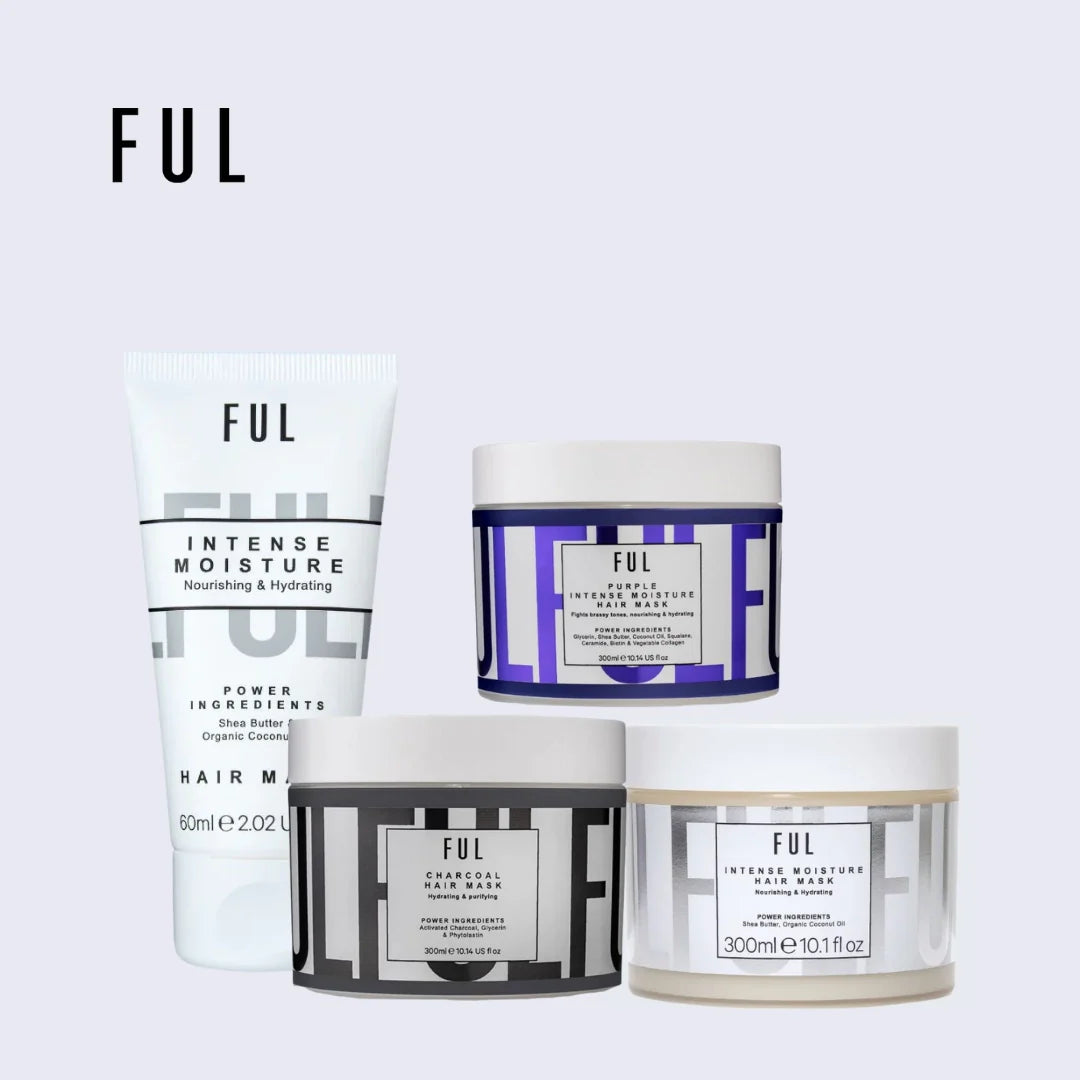
A hair mask is a deep conditioning treatment designed to deliver concentrated moisture, nutrients, and strengthening ingredients into the hair shaft to address concerns such as dryness, damage, frizz, colour stress, and weakness. Unlike regular hair conditioner, which mainly smooths and detangles the hair surface, a hair mask works over a longer period to provide intensive nourishment, repair support, and long-lasting manageability.
From a functional perspective, hair masks work by combining natural oils, proteins, and botanical extracts that hydrate the hair, reinforce weak areas, smooth the cuticle, and improve elasticity. This makes hair masks especially effective for dry, damaged, frizzy, curly, or colour-treated hair, where regular conditioning is often not enough. When used correctly and at the right frequency, hair masks help improve softness, reduce breakage, control frizz, enhance shine, and support overall hair health, making them a targeted treatment rather than a daily maintenance product.
What Does a Hair Mask Do?
A hair mask offers a deep conditioning treatment that delivers a high concentration of hydrating, strengthening, and nourishing ingredients into the hair shaft to correct moisture loss, structural weakness, and surface roughness. Unlike regular hair conditioner, which mostly works on the surface, hair masks strengthen, smooth frizz, add shine, and improve overall manageability for healthier, more resilient hair. Depending on your hair type, whether dry or damaged, a hair mask works differently.
How Hair Mask Works for Different Hair Types:
-
For Dry Hair: Hair mask restores hydration within the hair shaft, reducing brittleness, improving softness, and helping the hair retain moisture between washes.
-
For Damaged Hair: If your hair is processed or weakened by heated styling, a hair mask reinforces weak sections of the hair shaft, delivers amino acids and proteins (like keratin) to fill gaps in the damaged cuticle, and prevents further breakage and split ends.
-
For Frizzy Hair: A hair mask acts as a smoothing agent, deeply nourishing the hair and flattening lifted cuticles. It tames flyaways and creates a barrier against humidity, which is the primary cause of puffiness.
-
For Curly Hair: A hair mask provides the intense nourishment required to define the curl pattern, boost elasticity, and prevent the crunchy feel often associated with a lack of moisture.
What Are the Benefits of a Hair Mask?

The benefits of a hair mask are deep nourishment, improved hydration, and targeted repair that address specific hair concerns such as dryness, frizz, damage, and colour stress. Additionally, as hair masks use a concentrated treatment formula and remain on the hair longer than regular conditioning treatments, they improve strength, smoothness, and overall hair condition.
5 benefits of a hair mask:
-
Moisturises the hair: Hydrating ingredients, such as humectants and nourishing oils, present in the hair mask help attract and retain water within the hair shaft. This improves moisture balance, allowing hair to feel softer, more flexible, and less prone to dryness.
-
Reduces frizz: By deeply saturating the hair with smoothing agents, the hair mask creates a sleek surface that resists humidity and tames unruly flyaways.
-
Protects the hair: With ingredients like Argan Oil and antioxidants, the hair mask builds a protective shield around each hair strand, shielding against environmental stressors such as UV rays and pollution.
-
Restores damaged hair: Hair mask delivers proteins and amino acids that fill gaps in the cuticle, helping strengthen hair and significantly reduce split ends and breakage.
-
Enhances colour-treated hair: A hair mask specifically for processed hair helps lock in pigment by sealing the cuticle layer. This not only keeps your colour vibrant for longer but also restores the shiny, healthy gloss that chemical dyes can sometimes strip away.
What Are the Benefits of a Hair Mask for Dry Hair?
A hair mask for dry hair provides deep hydration, enhanced moisture retention, and lasting nourishment to help correct dryness and brittleness. Dry hair often lacks sufficient water and natural oils, which makes it feel rough and less flexible. A hair mask works by delivering moisturising ingredients into the hair shaft, helping replenish lost moisture and restore balance. This targeted care improves softness, increases elasticity, and reduces the likelihood of hair breakage, making the benefits of hair masks for dry hair more effective and longer-lasting than regular conditioning treatments.
What Are the Benefits of a Hair Mask for Frizzy Hair?
For frizzy hair, a hair mask offers deep hydration, cuticle smoothing, and strand strengthening that help control flyaways and improve overall hair texture. Frizz often develops when hair absorbs moisture unevenly, and the cuticle remains raised. A hair mask works by sealing the cuticle and improving moisture balance along the hair length, allowing strands to lie flatter. With regular use, frizzy hair feels softer, appears more defined, and stays easier to manage, highlighting the benefits of a hair mask for frizzy hair even in humid conditions.
What Are the Key Ingredients in a Hair Mask?
The key ingredients in a hair mask are natural oils, proteins, and botanical extracts that work together to nourish, strengthen, and condition the hair. Each ingredient plays a specific role, targeting hair concerns such as dryness, damage, frizz, and weakness by delivering concentrated care directly to the hair shaft.
-
Key Ingredients for Hair Strength & Repair
For hair strength and repair, hair masks rely on ingredients such as keratin and proteins to rebuild and reinforce the hair structure. Coconut oil and argan oil help improve elasticity, allowing hair to bend without breaking, while shea butter and mango butter soften the hair and protect weakened areas. Additional nourishing ingredients, including avocado, olive oil, honey, aloe vera, banana, egg, and glycerin, further support flexibility and overall hair resilience.
-
Key Ingredients for Hydration
Hair masks include hydrating ingredients, such as glycerin and hyaluronic acid, which bind moisture, while shea butter, argan oil, aloe vera, and coconut oil help seal hydration into the hair shaft, keeping hair soft and smooth. All of these ingredients in the hair mask work together to improve moisture retention and prevent dryness by attracting and retaining water in the hair.
-
Key Ingredients for Clarifying
Clarifying ingredients such as charcoal and clay present in the hair mask help remove buildup from excess oils, styling products, and environmental pollutants. Charcoal and clay absorb impurities, citrus extracts refresh the hair and scalp, tea tree oil supports cleanliness, and apple cider vinegar helps rebalance the hair and remove residue.
How to Use a Hair Mask?
To use a hair mask, begin by shampooing the hair, gently towel-dry until damp, section the hair evenly, apply the mask, distribute it through the lengths, and leave it on for the recommended time. Although this process takes longer than using regular hair conditioner, following these steps to apply hair masks ensures better and longer-lasting results.
1. Wash Hair With Shampoo
Start by washing your hair with shampoo to remove dirt, oil, and product buildup so the hair mask can work effectively. Avoid overwashing, as frequent shampooing can strip natural oils, leaving hair more prone to dryness.
2. Towel Dry Hair Until Damp (Not Completely Dry)
Gently towel-dry the hair after rinsing out the shampoo. The hair should be damp, not dripping wet, as excess water can dilute the hair mask and reduce absorption.
3. Section Hair for Even Application
Divide the hair into sections to ensure the hair mask is applied evenly. Sectioning is especially helpful for curly or thick hair, as it prevents missed areas and allows the hair mask to be distributed more evenly.
4. Apply the Mask From Mid-Length to Ends (Avoid Roots)
Apply the hair mask from mid-lengths to ends, where hair is usually drier and more damaged. Avoid the roots unless the product is specifically designed for scalp use.
5. Comb Through Hair if Needed
Use a wide-tooth comb to evenly distribute the hair mask throughout the hair. Always start combing from the ends and move upward to prevent unnecessary breakage and pulling.
6. Leave Mask in as Directed
Leave the hair mask on for the recommended time mentioned on the product, generally 3-20 minutes. To enhance absorption, cover the hair with a shower cap or wrap it in a warm towel during this stage, then rinse thoroughly.
How to Choose the Best Hair Mask for Your Hair Type?
To choose the best hair mask for your hair type, start by matching the ingredients to your hair’s specific needs, considering factors such as hair texture, thickness, and overall condition. These factors influence how hair responds to moisture, repair, and conditioning treatments. Therefore, identifying whether your main concern is hydration, damage repair, frizz control, or colour maintenance helps you choose the right hair mask formulated to address those specific issues, rather than using a one-size-fits-all treatment.
How to Choose a Hair Mask for Fine Hair?
For fine hair, look for a hair mask with lightweight, volumising formulas that strengthen the hair without weighing it down. Ingredients such as biotin, collagen, and proteins like keratin or silk help support fine strands and improve resilience. Additionally, to maintain softness and shine without greasiness in fine hair, choose formulas that include gentle hydrating ingredients such as glycerin, aloe vera, or vitamin E. Whereas avoid heavy oils, thick butters, or silicone-heavy products, and apply the mask mainly from mid-lengths to ends to preserve movement and volume.
How to Choose a Hair Mask for Dry Hair?
To choose a hair mask for dry hair, focus on rich, deeply hydrating ingredients such as coconut oil, argan oil, shea butter, avocado oil, and honey, which help restore moisture and softness. Dry hair texture should guide your choice, as finer hair benefits from lighter hydration while thicker or curlier hair responds better to richer formulas. Hair masks that also contain keratin, silk proteins, or hyaluronic acid can help improve smoothness and manageability when dryness is combined with damage or frizz.
How to Choose a Hair Mask for Damaged Hair?
When choosing a hair mask for damaged hair, look for ingredients like keratin to strengthen the hair structure, along with nourishing oils like argan or coconut oil to support moisture. Additionally, shea butter, ceramides, and pro-vitamin B5 help improve elasticity and reduce breakage. Selecting the right formula depends on hair thickness and scalp condition to avoid excess weight. Applying the hair mask to damp hair allows repair-focused ingredients to distribute evenly and work more effectively.
How to Choose a Hair Mask for Frizzy Hair?
To choose a hair mask for frizzy hair, prioritise deep hydration and cuticle-smoothing ingredients such as coconut oil, argan oil, glycerin, and honey, which help lock in moisture and calm frizz. Strengthening ingredients like keratin or pro-vitamin B5 further support a smoother texture. Hair thickness should guide formula choice, with richer hair masks suited to thick hair and lighter options better for fine hair. Using the hair mask regularly on clean, damp hair helps maintain control and softness.
How to Choose a Hair Mask for Coloured Hair?
For coloured hair, first identify your main concern, whether it is hydration, repair, shine, or colour maintenance. Look for colour-safe formulas that contain nourishing oils such as coconut, argan, or almond oil, along with vitamins and proteins like keratin to strengthen and condition the hair. Hair texture also matters, as fine hair needs lighter treatments while coarse or curly hair benefits from richer hair masks that restore moisture without stripping colour.
How to Choose a Hair Mask for Curly Hair?
Curly hair benefits from a hair mask that delivers deep hydration and elasticity support. Look for moisturising ingredients such as shea butter, coconut oil, aloe vera, and glycerin, which help curls retain moisture and maintain their shape. Hair masks designed for curly hair should focus on improving softness and definition while supporting the natural curl pattern. Regular use of hair masks also helps curls feel smoother, more flexible, and easier to manage.
How Often to Use Hair Mask?
You should generally use a hair mask once a week, but the ideal frequency depends on your hair type, overall condition, and primary concern, such as hydration, repair, or frizz control. Hair masks provide intense nourishment and conditioning, which is why frequency matters. Using a hair mask too often can lead to over-moisturising or heaviness, while using it too infrequently may not give the hair enough time to recover from dryness or damage. Therefore, adjusting the balance on how often to use a hair mask is crucial to maintain balance and effectiveness.
Hair Mask Frequency Recommendations by Hair Type:
-
Dry Hair: Once a week, but if it is extremely dry or damaged, 2-3 times weekly.
-
Damaged Hair: 1 to 3 times per week based on severity.
-
Normal Hair: Once a week for maintenance.
-
Colour-Treated Hair: 1-2 times per week for deep hydration.
-
Fine/Oily Hair: Once a week or every other week, focus on mid-lengths to ends.
-
Thick Hair: 1-2 times per week based on hair thickness.
-
Curly Hair: Once a week or every 5-7 days to support hydration and elasticity
Do Hair Masks Really Work?
Yes, hair masks really work by delivering a concentrated dose of moisture, nutrients, and conditioning agents deep into the hair shaft, where regular conditioners cannot reach as effectively. This deeper action helps repair hair dryness, smooth the cuticle, reduce frizz, improve shine, and strengthen weakened strands, making hair feel softer and more manageable. Additionally, hair masks act as intensive conditioners, with benefits that last longer than a standard wash-out product. However, whether hair masks work or not ultimately depends on choosing the right hair mask for your hair’s needs, such as hydration-focused formulas for dryness or protein-based hair masks for damage, and using them at the correct frequency.
What Is the Difference Between Hair Conditioner and a Hair Mask?
A hair mask is a thicker and intensive treatment used weekly for deep nourishment and repair, while hair conditioner is for regular use, providing light hydration and slip to detangle and smooth hair. Although both products support hair health, they serve different roles within a hair care routine and address different levels of hair needs.
For more depth, here is a table highlighting the difference between hair conditioner and hair mask:
|
Aspect |
Hair Mask |
Hair Conditioner |
|
Purpose |
Deep nourishment, repair, and targeted treatment |
Every day softness and detangling |
|
Usage Frequency |
Intensive conditioning |
Light conditioning |
|
Treatment Intensity |
Weekly or as needed |
After every or most hair washes |
|
Depth of Action |
Penetrates deeper into the hair shaft |
Works mainly on the hair surface |
|
Application Time |
3-20 minutes |
1-3 minutes |
|
Formula Texture |
Thick and rich |
Lightweight |
|
Best For |
Higher concentration of oils, proteins, and nutrients |
Normal maintenance and smoothness |